
Match a Full Mortise Hinge Before Replacing It
Identify full mortise mounting, measure both leaves, and check thickness, corner radius and screw preparation before choosing a replacement door hinge.
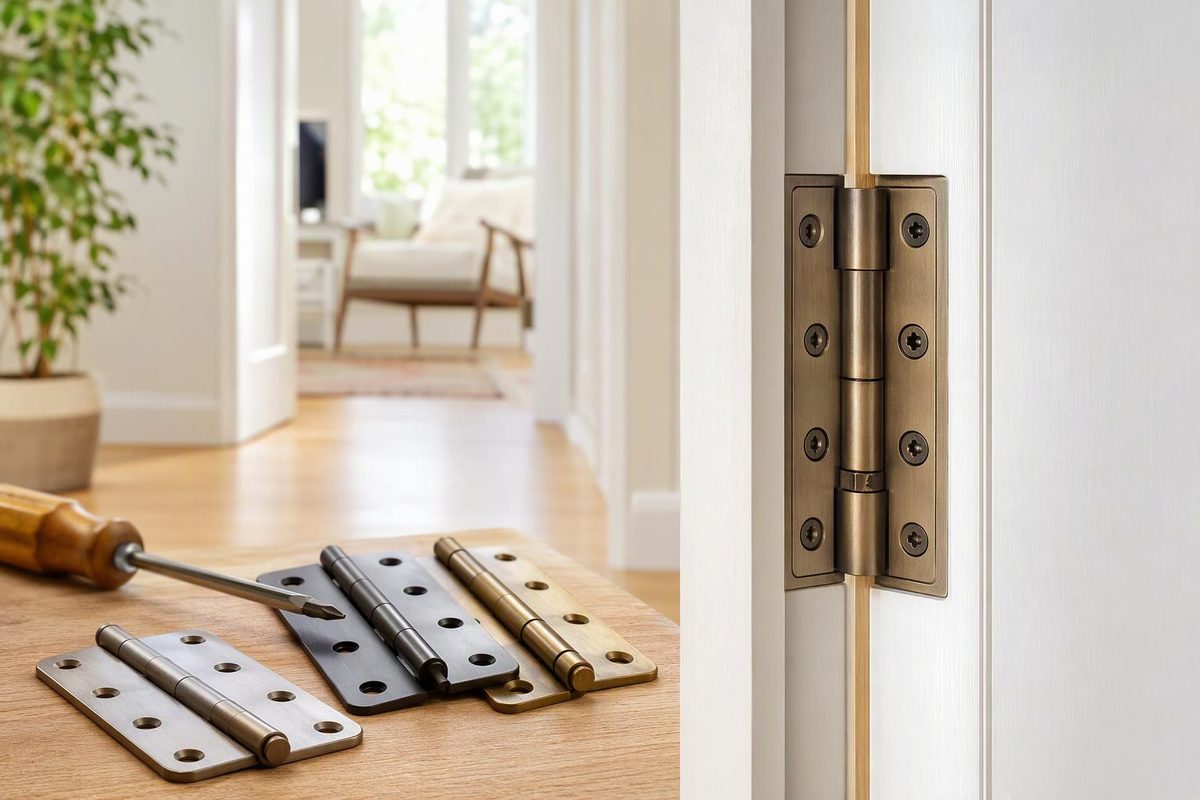
A full mortise hinge has both leaves recessed: one into the door edge and one into the frame. Each recess is a mortise. For a replacement, match the hinge’s height × fully open width, leaf thickness, corner shape and screw-hole pattern, then verify that the replacement suits the door and its required functions. Matching the finish or nominal size alone is not enough. Hager’s hinge guide defines full mortise by where the two leaves are mounted.
Select the mounting arrangement and your replacement checks to see what remains unresolved.
Replacement Readiness Check
Inspect both leaves first
A full mortise hinge requires a recessed leaf on both the door and frame. The replacement cannot yet be assessed as a like-for-like match.
Then compare the complete fit specification and confirm application suitability.
What counts as a complete fit check
- Height × fully open width, with units recorded.
- Flat-leaf thickness against both mortise depths.
- Corner shape and radius on each leaf.
- Screw-hole centers, countersinks and specified fasteners.
- Leaf arrangement, bends or offset, and mortise locations.
What application verification includes
Check the model against door weight, width, usage, door and frame materials, and required bearing, closer, spring, security or electrical functions. Check handing where required.
For a labeled fire door, confirm applicable assembly requirements. A fit match does not authorize mortise changes or establish fire-door, egress or accessibility suitability.
Sources: Hager hinge guides, SECLOCK hinge identification guidance, and Allegion’s NFPA 80-2022 alteration explanation cited in the article. This check is not a load rating or code approval.
“Full mortise” describes the mounting arrangement, not the bearing type or load capacity. It also does not mean a concealed hinge: on an ordinary full mortise butt hinge, the knuckle and pin remain visible at the hinge side. A product described as full mortise still needs a dimensional and application check before you can treat it as a replacement.
Both Leaves Must Be Recessed
Open the door and look at how both leaves attach. A recessed door leaf alone does not establish that the hinge is full mortise. Check the frame leaf too, rather than identifying the hinge from the visible barrel or from a photograph taken with the door closed.
| Mounting Type | Door Leaf | Frame Leaf |
|---|---|---|
| Full mortise | Recessed into door edge | Recessed into frame |
| Half mortise | Recessed into door edge | Surface-mounted |
| Half surface | Surface-mounted on door face | Recessed into frame |
| Full surface | Surface-mounted | Surface-mounted |
These are distinct preparations, as shown in Hager’s mounting descriptions. Changing between them is not a like-for-like hardware swap. If one existing leaf is surface-mounted, do not order a full mortise hinge merely because its height looks right.
The useful distinction is where the flat leaves sit. On a full mortise installation, the recesses accommodate the leaves in the door edge and frame. The projecting knuckle is not evidence of surface mounting; it is the pivot portion of the ordinary butt hinge.
If paint or an obstructed view makes the preparation unclear, record the mounting type as unverified. A replacement decision should not depend on guessing whether the frame has a recess beneath its leaf.
Measure Height and Fully Open Width
Support the door securely before removing a hinge. Record any maker or model markings and photograph both leaves and their screw holes. Those records help distinguish a standard-looking hinge from a model with a special leaf arrangement or function.
For a butt hinge, open it flat. Measure height along the pin axis and width across the entire open hinge—not just one leaf. Hager specifies the order as height first, open width second: a 4-1/2 × 4-inch hinge is 4-1/2 inches tall and 4 inches wide when open. Hager sizing guidance
Do not reverse those dimensions when searching a catalog. Also distinguish the hinge measurement from the mortise measurement: one describes the hardware, while the other describes the recess already cut into the door or frame. Record both so that a replacement drawing can be checked against the actual installation.
| Check | What to Record or Compare |
|---|---|
| Height × open width | Both dimensions, with units |
| Leaf thickness | Flat-leaf measurement and drawing |
| Corners | Square or rounded; radius of each leaf |
| Screw preparation | Hole count, centers and countersinks |
| Leaf arrangement | Equal or unequal leaves; bends or offset |
| Existing mortises | Dimensions, depth and location |
Keep inches and millimeters clearly labeled. A bare dimension in a note or photograph is less useful than a measurement tied to a specific feature and unit. When comparing a catalog drawing, check that you are reading the overall open width rather than a leaf dimension or another reference dimension.
If the existing hinge carries an identifiable model marking, use its manufacturer drawing alongside your measurements. The marking is a lead, not a substitute for checking the door and frame: the existing preparation still has to accept the proposed replacement.
Match Corners and Screw Preparation Separately
Common rounded-corner options include 1/4-inch (6.35 mm) and 5/8-inch (15.88 mm) radii, but verify the actual replacement specification. “Rounded corner” is not a complete size description. Check each leaf rather than assuming the door and frame preparations have the same corner shape.
The replacement leaf must fit the recess outline as well as its height. A square-corner leaf and a rounded recess are not automatically interchangeable. Treat a corner mismatch as a preparation issue to resolve before ordering, not something that a matching finish or screw count can overcome.
“Template” hinges use a standardized preparation; that label is not a reason to skip checking an existing screw pattern, especially on residential hardware. See SECLOCK’s hinge identification guide and our step-by-step hinge measurement guide.
For screw preparation, compare hole count, center locations, countersinks and the specified fasteners. The same number of holes does not establish that they occupy the same positions. Photographs are useful for recording the pattern, but the replacement drawing should supply the dimensions you compare with the existing hardware.
A dimensional match also does not settle fastener suitability. Check the replacement’s fastener requirements against the door and frame materials. If the required attachment differs from what is present, leave that part of the replacement check unresolved until you have the applicable manufacturer instructions.
Same Nominal Size Can Have Different Leaf Thickness
Measure the flat leaf with calipers or a micrometer, then compare it with the replacement drawing. Height and open width do not tell you how thick the metal is or whether it will sit correctly in the existing recess.
As a documented example, Ives’ 4-1/2-inch electric full mortise hinge template lists 0.134-inch (3.40 mm) metal for its standard-weight 5BB1 and 0.180-inch (4.57 mm) for its heavy-weight 5BB1HW. Those are model-specific values, not universal thicknesses for all full mortise hinges. Ives dimension template
| Ives Model in the Template | Weight Designation | Metal Thickness |
|---|---|---|
| 5BB1 | Standard-weight | 0.134 in / 3.40 mm |
| 5BB1HW | Heavy-weight | 0.180 in / 4.57 mm |
A thicker leaf will not sit flush in a recess cut for a thinner one. Do not assume a heavy-weight upgrade is a drop-in replacement. Conversely, matching a weight designation without checking the actual drawing does not establish a thickness match across manufacturers or product families.
Compare the existing mortise depth with the proposed leaf thickness on both the door and frame. If they do not agree, the purchase is no longer simply a matching-hinge replacement. You need to resolve the preparation difference and, where applicable, whether altering that preparation is permitted.
If you are also changing bearing construction, use our ball-bearing hinge compatibility checks. Full mortise mounting and bearing construction are separate parts of the specification; confirming one does not confirm the other.
Application Suitability Comes Before Finish
Check door weight, width, frequency of use, door and frame materials, and any closer, spring or electrical function. Hager identifies door weight, width and usage as hinge-selection factors; the full mortise label alone establishes none of them. Hager selection guide
The information supplied here does not establish a universal weight capacity or hinge count for full mortise hinges. Use the proposed model’s selection guidance for the actual door. A hinge that fits the recesses can still be the wrong choice for the load, use or function.
Separate the replacement decision into two checks: whether the hardware fits the existing preparation, and whether the model suits the application. A favorable answer to the first is not evidence for the second. This is especially relevant when changing from the existing model rather than replacing it with the same verified specification.
Also match any non-removable-pin security feature, and check handing where the model requires it. For example, full mortise hinges with concealed magnetic contacts can be handed. SECLOCK’s hinge options guide
Do not discard a special feature because it is not obvious in a general product photograph. Maker markings, the existing specification and the replacement’s product documentation are more useful than appearance alone for confirming electrical or security functions.
Choose the finish after those requirements are settled. Finish is part of the order, but it cannot compensate for a different leaf thickness, an incompatible hole pattern or a missing required function.
A Replacement Slab Must Follow the Existing Frame
For a replacement slab, copy the existing frame’s mortise locations rather than starting with customary spacing. Our hinge placement guide explains the reference-point method.
This is a different task from replacing a hinge in existing recesses. You are matching a new door’s preparation to a frame that already defines where the hinges must meet. A correctly sized full mortise hinge does not establish those locations for you.
Record the frame recesses individually, including their dimensions, depth and location. Keep the location records separate from the hinge’s height and open width so that the hardware specification is not mistaken for a cutting layout.
If the proposed hinge differs from the existing one, resolve that choice before treating the old frame preparation as a finished match. The frame locations remain the reference for the slab, but the selected leaves still need compatible recesses and attachment details.
Fire-Door Mortise Changes Need Specific Approval
For a labeled fire door, verify the complete assembly’s requirements before changing hinges or recutting mortises. A dimensional match alone does not establish fire-door, egress or accessibility suitability.
Allegion’s explanation of NFPA 80-2022 lists a butt-hinge mortise among preparations outside permitted job-site work. Obtain direction from the component manufacturer and listing laboratory before cutting; a field modification requires advance approval. The locally adopted edition, applicable listings and authority having jurisdiction determine what is allowed. Fire-door alteration guidance
That guidance should not be read as permission to deepen a recess because a heavier hinge appears preferable. Nor does it mean that a physically matching replacement is automatically approved for every labeled assembly. Keep the existing preparation, the proposed hardware and the assembly requirements together when requesting direction.
If approval or listing compatibility remains unknown, the replacement remains unverified. The decision tool above identifies that gap; it does not provide code approval or authorize field cutting.
Order From a Verified Specification
A useful replacement specification identifies the mounting type, height × open width, leaf thickness, corners, screw preparation and leaf arrangement. It also identifies the required bearing construction, security or electrical features, handing where applicable, and finish.
Before ordering, compare that specification with the actual replacement drawing and application guidance. If a seller’s listing omits thickness, corner radius or hole locations, those details are unknown—not presumed to match because the advertised size agrees.
Keep the hinge photographs, measurements and model information with the order. The result you want is a replacement whose fit and required functions are documented, not merely another hinge described as “full mortise.”