
Chrome Hinges: Match Size, Function and Finish
Match replacement chrome hinges by dimensions, corner radius, bearing type and base metal. Decode US26 and US26D before choosing a finish.
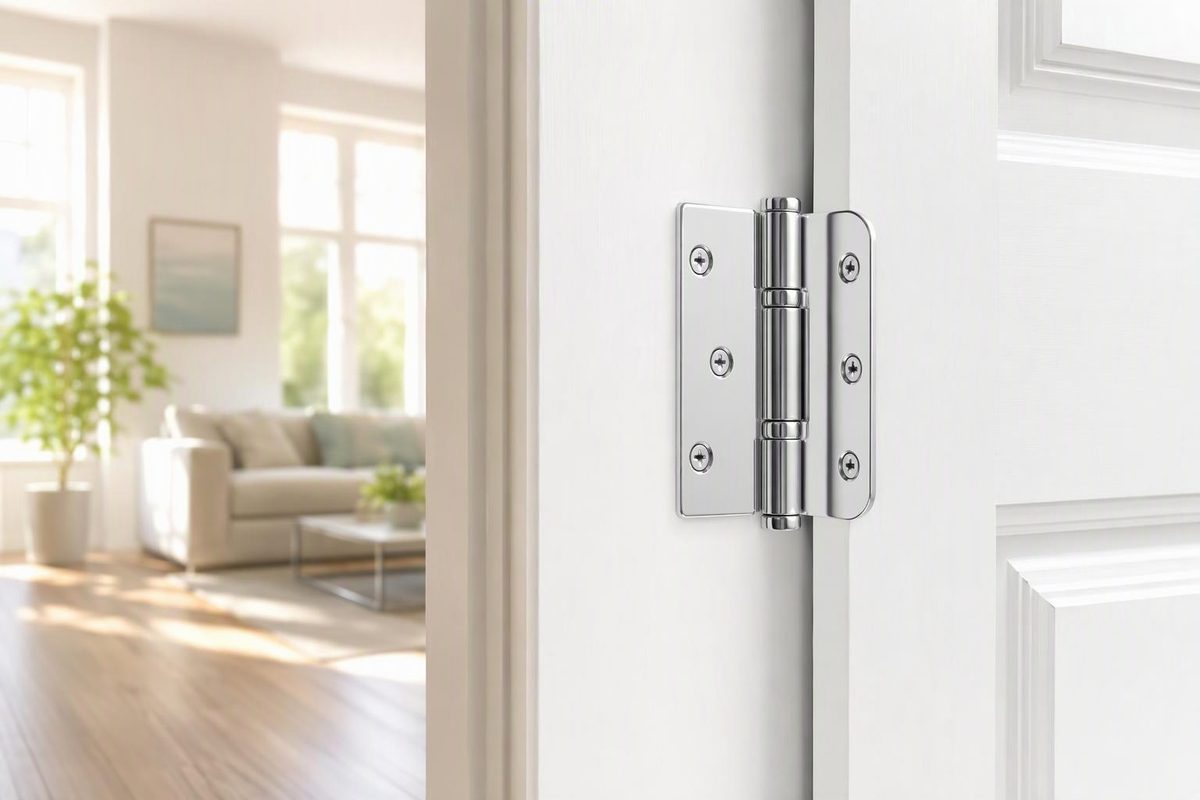
Chrome describes the finish, not the hinge’s fit or duty rating. For a replacement door hinge, match the mounting type, height × open width, leaf thickness, corner shape and screw pattern first. Then confirm that the bearing type and base metal suit the door’s weight, use and exposure before choosing bright or satin chrome.
Match the existing hinge before choosing chrome
For an ordinary butt hinge, open it flat and record its height along the pin and width across both leaves. A 4 × 4-inch hinge means 4 inches high × 4 inches open width—not a 4-inch-wide individual leaf. Manufacturer ordering tables distinguish height × width, thickness, mounting type and corner options; these are separate specifications. See the Ives architectural hinge catalog.
Record these details from the existing hardware and compare them with the replacement’s drawing:
- Mounting type: full mortise, surface-mounted or another configuration. Do not substitute a different mounting type simply because its finish matches.
- Height × open width: keep the units visible; do not choose by door thickness alone.
- Leaf thickness: compare with the existing hinge and mortise depth.
- Corners: square, 1/4-inch radius or 5/8-inch radius, as applicable. “Round corner” is not a complete specification.
- Screw preparation: hole count, hole locations, countersinks and the specified fasteners for the door and frame materials.
- Operation and options: plain bearing, ball bearing, concealed bearing or spring action; also record security features and any handing requirement stated by the manufacturer.
Use the hinge-measuring guide for a replacement worksheet. As an example of the detail worth checking, Hager’s T308RC template specifies leaf gauge, knuckle diameter and different wood and machine screws—not just nominal hinge size.
Bright chrome vs. satin chrome: read both codes
The familiar US finish designation describes the finish family. The corresponding three-digit designation can also distinguish the base metal. Hager’s finish chart lists these combinations:
| Finish | Common US designation | On plated steel | On plated brass |
|---|---|---|---|
| Bright chrome | US26 | 651 | 625 |
| Satin chrome | US26D | 652 | 626 |
Do not treat “626” and “652” as identical material specifications, even though both describe satin chrome. Check the actual hinge model’s material field and ordering chart, rather than relying on a retailer’s shortened finish label.
Satin nickel and satin stainless are separate finishes, not alternative names for satin chrome. Hager lists them separately. If the hinges need to match existing handles or locks closely, compare a physical finish sample beside that hardware rather than choosing from a screen image alone.
Choose the bearing and base metal for the job
A finish change should not remove a function the door needs. Hager’s 1279 plain-bearing steel hinge is offered in US26 and US26D, but its specification says to use a ball-bearing hinge with a door closer. Chrome availability does not make a plain-bearing hinge suitable for every opening.
Ives specifies ball-bearing or concealed-bearing hinges for doors with closers. Check the manufacturer’s door-weight and frequency-of-use recommendations too. If replacing existing bearing hinges, start with the ball-bearing hinge identification guide, rather than selecting a lighter hinge by appearance.
For exterior or corrosive locations, verify the base metal and pin material. Ives recommends stainless steel, brass or bronze for exterior doors and corrosive interior areas; its catalog also distinguishes steel pins from stainless-steel pins. A shiny chrome surface alone does not establish corrosion suitability. Consult the manufacturer’s selection guidance for the specific application.
On fire-rated, egress, accessible or electrified openings, follow the complete assembly’s manufacturer instructions and applicable local code. Matching dimensions and finish alone does not establish suitability.
Clean the finish without confusing it with lubrication
For chrome, Hager’s care guide recommends a soft cloth with mild soap and water and warns against abrasive cleaners or lacquer thinner on hinges. Follow the hinge maker’s instructions for lubrication separately; cleaning the visible finish is not bearing maintenance.
If the reason for replacement is rubbing or sagging rather than appearance, check the hinges and screw fixings first. A correctly matched chrome replacement still needs sound attachment and an aligned opening.